NDT of Concrete in Practice
Methods, Trade-Offs, and What Ultrasonic Tomography Adds
Concrete tells you very little about its internal condition by looking at the surface. Cracks, voids, corroding rebar, poorly grouted tendon ducts – the problems that shorten a structure’s life are hidden inside. Non-destructive testing (NDT) is how engineers see what’s there without cutting, coring, or guessing. This guide walks through the methods that matter, the defects they target, and the trade-offs you face when choosing between them. It gives particular attention to ultrasonic tomography, which has become the go-to approach for volumetric imaging of concrete from a single surface.
This article is written and reviewed by the engineering team at ACS Group. Ultrasonic non-destructive testing of concrete is what we do every day: we design, build, and field-support the instruments described in section 5 (UPVT, single- and multi-channel pulse-echo, and FMC/TFM tomography platforms including the A1220 MONOLITH, A1410 Pulsar, UK1401 Surfer, A1221 Anchor, and the MIRA family of ultrasonic tomographs). Every section here is grounded in measurements we have run on real bridge decks, massive foundations, post-tensioned slabs, and reference blocks at facilities like the Federal Agency for Material Testing BAM test site in Horstwalde, Germany.
What you’ll find in this article
- Why NDT has become mandatory for aging infrastructure
- A quick taxonomy of method families
- A defect-by-defect map, paired to the methods that detect each one
- How ultrasonic pulse-velocity testing (UPVT) and ultrasonic pulse-echo tomography (UPET) differ in methodics and output
- Where GPR, electrochemical, and other methods fit
- A decision framework for choosing the right approach
- Equipment categories and what separates a professional tomography system
Table of Contents
- Why NDT Moved from Nice-to-Have to Mandatory
- The NDT Landscape at a Glance
- What NDT of Concrete Is Actually Looking For
- Construction-Stage Defects
- In-Service Degradation
- Reinforcement and Embedded Elements
- Geometric and Interface Conditions
- Mechanical and Surface Hardness
- Ultrasonic Methods
- UPVT: Ultrasonic Pulse Velocity Test
- Ultrasonic Pulse-Echo Flaw Detectors
- Ultrasonic Tomography and MIRA
- Impact-Echo
- Electromagnetic and Radar Methods
- Electrochemical Diagnostics for Rebar Corrosion
- Radiographic, Thermal, and Acoustic Emission
- Choosing the Right Method
- Equipment Categories and What Differentiates a Serious Ultrasonic Tomography System
- Key Takeaways
- References
1. Why NDT Moved from Nice-to-Have to Mandatory
Most of the world’s concrete infrastructure was built between the 1950s and 1980s. Bridges, dams, tunnels, containment structures, and highway decks from that era are now at or past their original design life. The question isn’t whether these assets need inspection. It’s how fast and how accurately you can assess what’s happening inside them.
The economics make the case on their own. Reactive repair – the kind triggered by visible spalling or a failed load test – runs three to five times the cost of planned, NDT-driven maintenance. Catching a delamination or a voided tendon duct early means a targeted repair instead of a lane closure and a structural retrofit.
Owner and contractual expectations have tightened in parallel. Concrete NDT does not have the prescriptive recertification regime that exists for weld inspection in steel structures, but asset owners, infrastructure operators, and rehabilitation programmes increasingly expect documented condition data over time such as structured inspection records, repeatable methods, and traceable instruments. The practical pressure to produce defensible, reproducible reports is real even where formal mandates are absent.
Access models are also widening. Alongside outright purchase, advanced ultrasonic arrays are increasingly available through rental, inspection-as-a-service contracts, and equipment leases. That shifts a six-figure purchase decision into a per-project operating cost and lowers the barrier for smaller engineering firms and municipal agencies to deploy the same instrumentation as large inspection contractors.

Resource Expenditure: Traditional vs. NDT Evaluation
The bottom line is this. No single NDT method covers the full range of inspection tasks in concrete. Modern inspection is multi-modal, and method selection is the engineer’s real skill.
2. The NDT Landscape at a Glance
Concrete NDT methods split into several families, each built on different physics and each with a different diagnostic window.
- Mechanical and surface hardness.
Rebound hammers and pull-off testers evaluate the outer 30 mm of the concrete surface. Fast, portable, and limited to relative comparisons rather than absolute strength values. - Acoustic (Low-frequency stress-wave methods).
Impact-Echo Method uses a mechanical strike and frequency analysis to detect thickness changes and large-scale voids from a single face. - Ultrasonic.
Three distinct branches here. Ultrasonic Pulse Velocity Test (UPVT) is a one-channel, velocity-based method that measures transit time through concrete to classify quality. Ultrasonic Pulse-Echo Test (UPET) is a single-sided method that locates discrete reflectors (reinforcement rebars, anchors, tendons as well as material voids) from time-of-flight on a single beam path. Ultrasonic tomography is the advanced version of UPET utilizing multi-channel arrays operating from a single side, producing 2D and 3D images of the concrete interior. Different methodology, different output, different use cases. - Electromagnetic and radar.
Ground-penetrating radar (GPR) in both pulsed and stepped-frequency variants, plus electromagnetic cover meters. Strong for locating metal (rebar, conduits, tendon ducts), limited when it comes to concrete defects like cracks and honeycombing. In field practice, GPR is one of the most widely deployed concrete NDT techniques on bridge decks and parking structures because of its scanning speed and ease of single-sided use. Ultrasonic tomography complements it where defect imaging and depth resolution are required. - Electrochemical
Half-cell potential mapping, surface resistivity, and connectionless pulse-response devices. These diagnose rebar corrosion state, not concrete defects. - Radiographic, thermal, and passive
X-ray and gamma radiography, infrared thermography, and acoustic emission monitoring. Each covers a narrow application window and carries specific operational constraints.

The NDT Landscape
Knowing the families is half the picture. The other half is knowing what you're trying to find inside the concrete, because the defect drives the method choice, not the other way around.
3. What NDT of Concrete Is Actually Looking For
Construction-Stage Defects
Honeycombing
Loose, under-compacted zones where coarse aggregate sits exposed without paste fill, as shown in the image below. These zones produce a sharp drop in acoustic impedance, making them visible to ultrasonic tomography. GPR can also flag them through dielectric anomaly, though with less certainty in dry conditions.
Internal voids and cavities
Air-filled pockets, blowholes behind formwork, cavities left by trapped water. The concrete-to-air interface reflects almost 100% of ultrasonic energy, so ultrasonic tomography detects these reliably. GPR struggles with dry voids because the dielectric contrast between dry air and dry concrete is low.
Cold joints and poor compaction
Interfacial weaknesses caused by pour discontinuities, delayed vibration, or layered placement. UPVT, ultrasonic tomography, and Impact-Echo all detect these, each with different depth reach and resolution
Inadequate cover
Rebar placed closer to the surface than the design specifies. Cover meters are the standard QC tool. GPR provides a second check and can map cover depth over large areas.
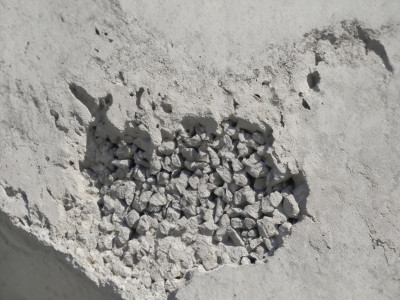
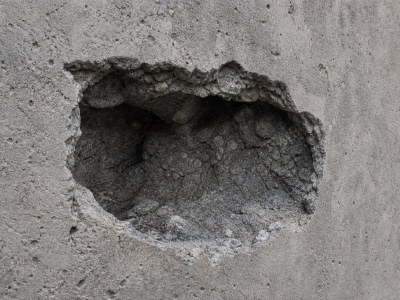
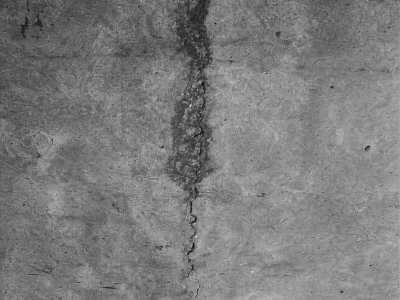
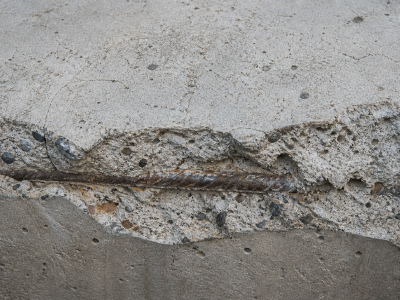
Construction-stage concrete defects
1. Honeycombing. 2. Internal voids and cavities.
3. Cold joints and poor compaction. 4. Inadequate cover.
In-Service Degradation
Delaminations
Horizontal planes of separation, typically developing below bridge-deck wearing surfaces or at repair-layer interfaces, visible in the image below. Ultrasonic tomography and Impact-Echo are the definitive detection tools. Infrared thermography flags shallow delaminations when surface temperature differentials are strong enough.
Surface-opening and internal cracks
Surface cracks are mapped visually. Crack depth – the dimension that matters for structural assessment – can be measured by ultrasonic tomography using diffraction signals from the crack tip (see Section 5c).
Carbonation front
The pH drop from CO₂ ingress is measured directly by phenolphthalein indicator on core samples. NDT’s role here is indirect: resistivity mapping can identify at-risk zones where carbonation is likely advancing.
Freeze-thaw damage
Micro-cracking and surface scaling from cyclic freeze-thaw exposure. UPVT velocity decline is a reliable indicator. Resistivity shifts provide supporting evidence.
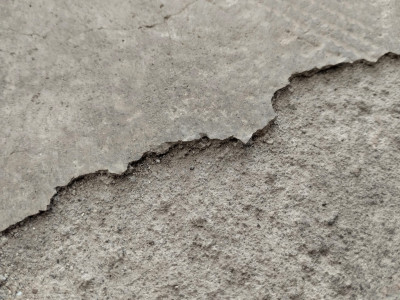
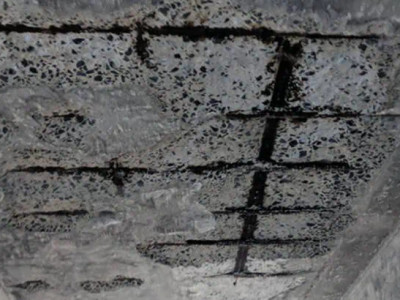
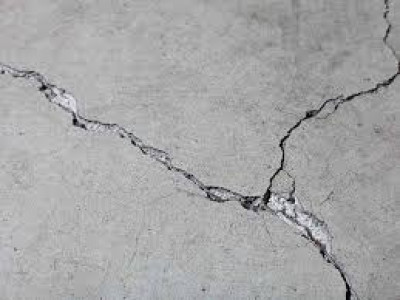
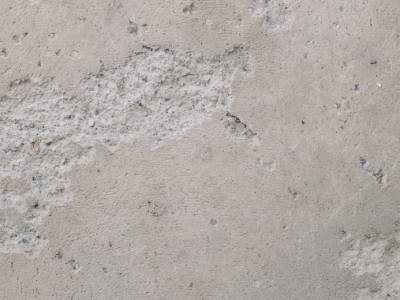
In-service degradation defects: (1) Delaminations, (2) Surface-opening and internal cracks,
(3) Carbonation front, (4) Freeze-thaw damage.
Image sources:
Fritz-Pak (delaminations);
Markham Global (carbonation);
Polytrade (freeze-thaw).
Reinforcement and Embedded Elements
Rebar location, spacing, diameter, and depth
GPR is the primary tool for rebar mapping. Cover meters handle shallow QC checks. Ultrasonic tomography confirms the first, second and further reinforcement mats, especially where GPR signals become congested in dense rebar grids.
Active rebar corrosion
Half-cell potential mapping gives the thermodynamic probability of active corrosion. Surface resistivity measures the kinetics (corrosion rate). Connectionless pulse-response devices combine both measurements without drilling to the rebar.
Post-tensioning tendon ducts
GPR locates the duct position and orientation. Ultrasonic tomography handles what GPR cannot see: grouting defects, air voids inside the duct, and broken tendons.
Embedded pipes and conduits
GPR identifies the target. Ultrasonic tomography confirms depth and resolves material behind dense reinforcement where GPR reflections pile up.
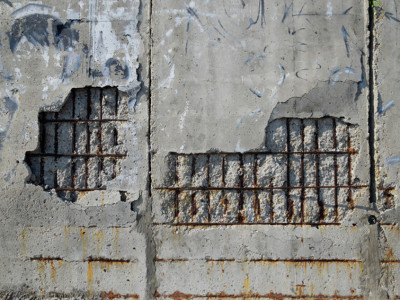
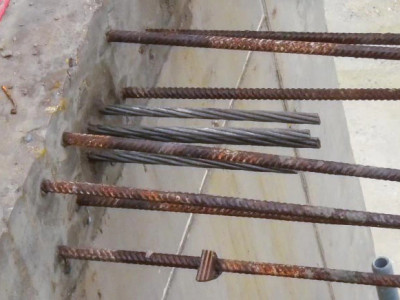
Reinforcement and embedded element defects: (1) Active rebar corrosion, (2) Post-tensioning tendon ducts.
Image sources:
Kryton (rebar corrosion);
Ground Penetrating Radar UK (tendon ducts);
Geometric and Interface Conditions
Element thickness and backwall condition
Impact-Echo and ultrasonic tomography both work from a single face. Tomography provides a full image of the backwall profile, not just a thickness number.
Overlay and repair-layer bond
Pull-off testing measures tensile bond strength at individual test points. IR thermography screens for shallow debonding. Ultrasonic tomography detects deeper interface defects and images the bond plane directly.

Geometric and interface condition defects
4. Mechanical and Surface Hardness
Mechanical methods are among the oldest tools in the concrete inspector’s kit. They test the surface or near-surface layer and are best understood as screening tools, not definitive diagnostic instruments.
Rebound hammer
A spring-loaded mass strikes a plunger on the concrete surface, and the rebound distance is recorded as an R-value. Digital variants measure impact velocity directly. The test reads only the outer 30 mm. Carbonation of the surface paste can inflate the R-value by up to 50%. Moisture content also affects results. Rebound testing is useful for uniformity mapping across a structure, flagging zones that differ from the average. It’s not reliable for determining absolute compressive strength from a single location.
Pull-off bond testing
A metal disc is bonded to the surface and pulled to failure under controlled tension. The result is a direct measure of tensile bond or near-surface tensile strength. Useful for evaluating overlay adhesion and repair-layer bond. Each test point sustains localized damage.
SONREB combination
Combining rebound data with UPV readings improves correlation with compressive strength significantly. Neither measurement alone is definitive, but fusing both reduces the uncertainty envelope. This combination approach is well-established in structural assessment campaigns.

Mechanical and surface hardness methods
Mechanical methods are useful for what they are, fast triage of the surface layer, but they stop at roughly 30 mm and they don't see inside the element. For anything deeper, the workhorse family is ultrasonics.
5. Ultrasonic Methods
Ultrasonics is the backbone of modern concrete NDT. This section covers three distinct ultrasonic method families – UPVT, UPET (both single-channel ultrasonic pulse-echo flaw detection, and multi-channel ultrasonic pulse-echo tomography), plus Impact-Echo Technique for context. The three ultrasonic approaches are built on different methodical approaches and produce fundamentally different outputs. They complement each other, but they’re not directly interchangeable.
For a focused companion read on why ultrasonic testing has become central to modern construction quality control, see our article The Vital Role of Ultrasonic Concrete Testing in Construction.
5a. UPVT: Ultrasonic Pulse Velocity Test
UPVT is the simplest of the three ultrasonic families. It’s a single-channel, velocity-based method that has been in use for decades, and it remains a valuable first-pass screening tool for concrete quality.
How it works. A transmitter sends a longitudinal (P-wave) pulse into the concrete. A receiver captures the arrival, and the instrument records the transit time. Velocity is calculated from V = L / t, where L is the path length and t is the transit time [3].
Sensor configuration. UPVT can be used from two sides (direct, through-transmission) or from one side (indirect transmission). Direct mode provides the most reliable readings. Indirect mode is used when only one face is accessible, though the readings are only relevant for near-surface areas.
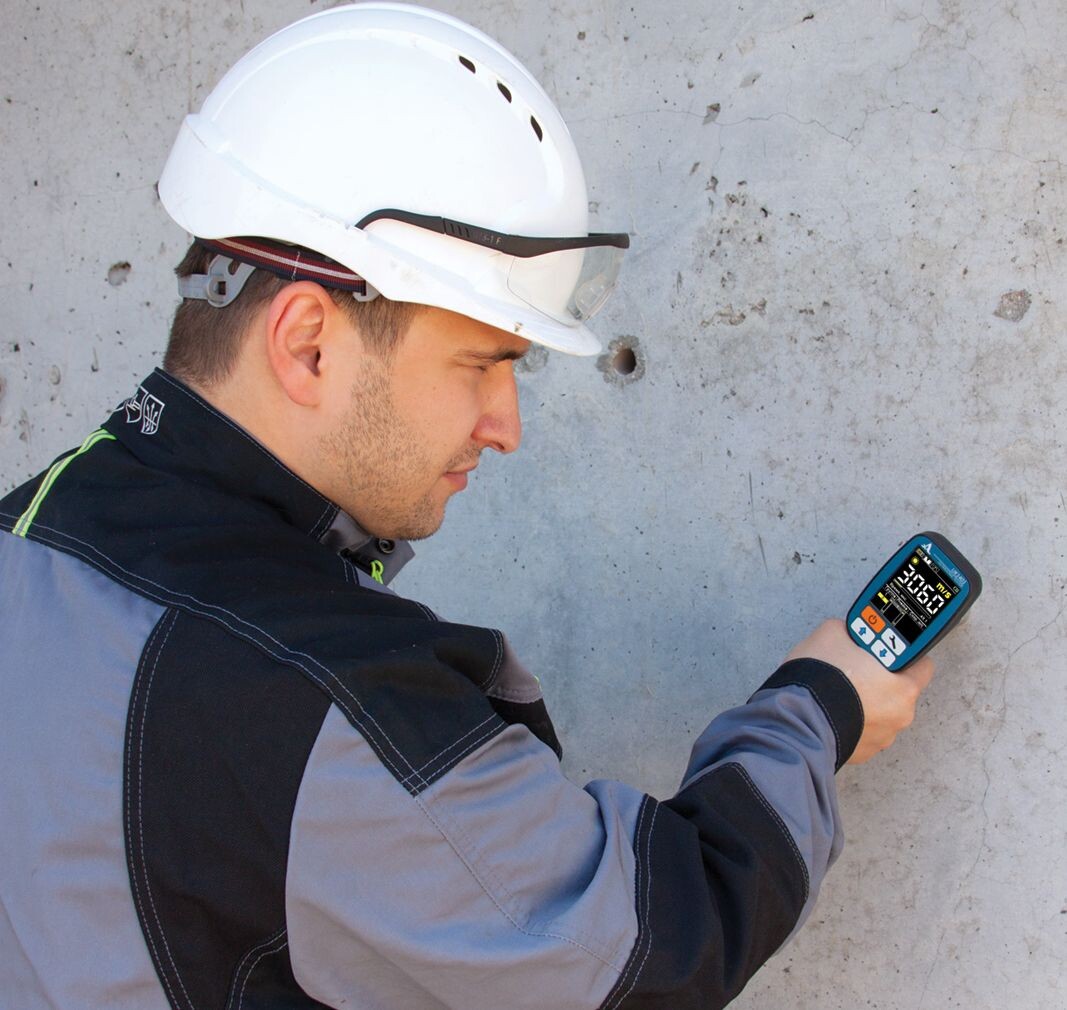

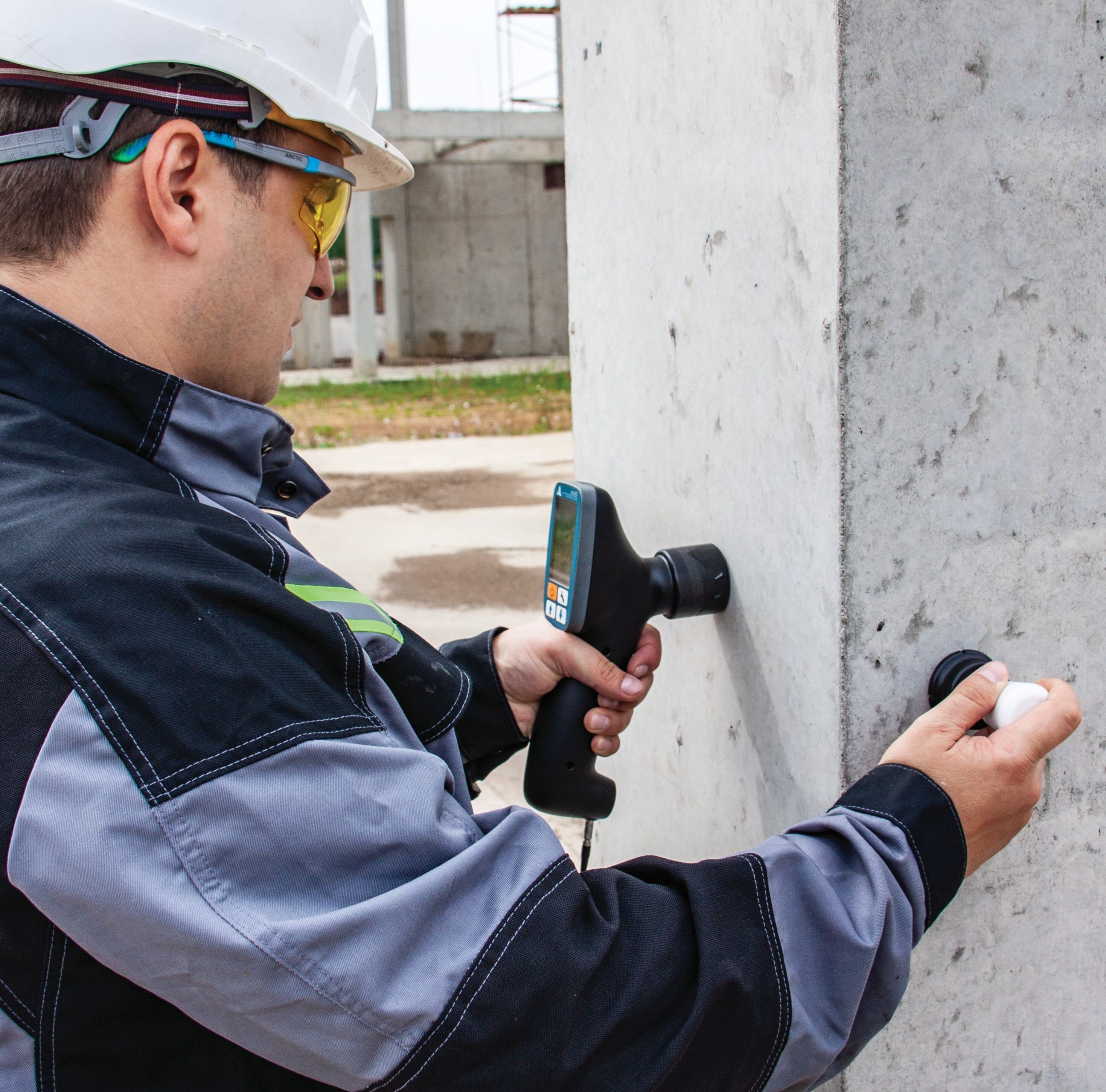
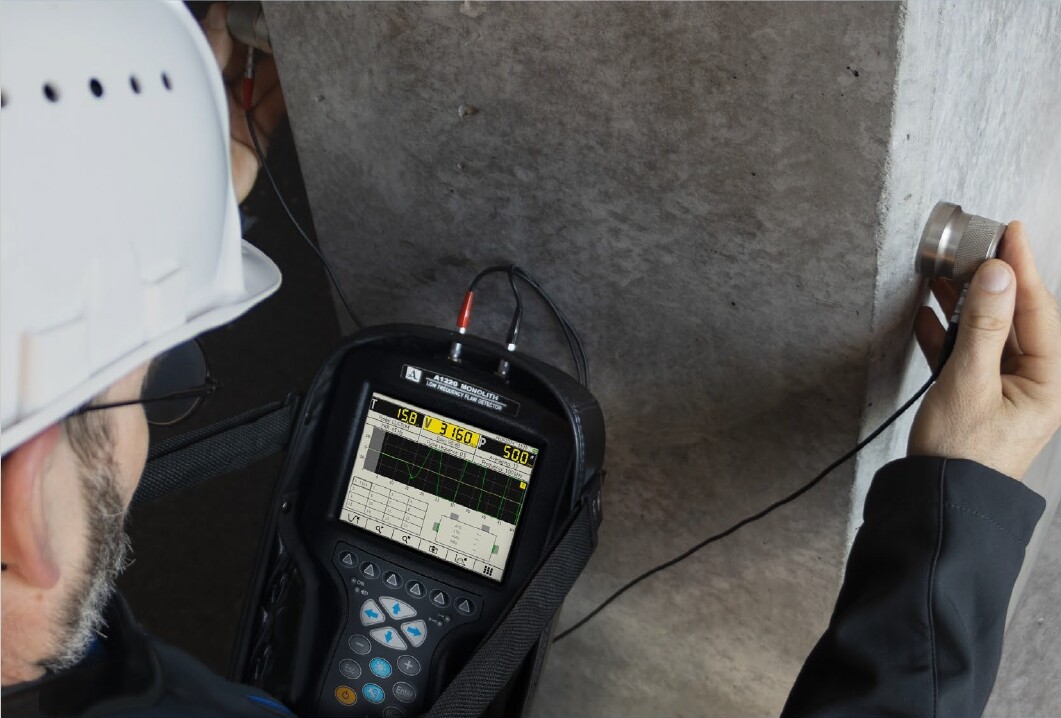
Once you have a transit time, the measured velocity maps directly to concrete condition. The standard ranges used in practice are:
| Velocity | Quality | Notes |
|---|---|---|
| > 4,500 m/s | Excellent | Dense, sound concrete |
| 3,500–4,500 | Good | Acceptable for most service |
| 3,000–3,500 | Questionable | Investigate further |
| < 3,000 m/s | Poor | Likely deterioration |
These ranges help classify concrete quality and detect zones of deterioration, poor compaction, or internal cracking.
UPVT has one well-known failure mode worth flagging, the rebar short-circuit effect. When a transducer aligns with a continuous reinforcing bar, the pulse travels along the steel at a higher velocity than through the surrounding concrete [7]. The result is a misleadingly fast reading that can mask a genuinely weak zone, which is why UPVT readings near heavy reinforcement need to be interpreted with care.
All of which makes UPVT what it is today, a fast screening tool for uniformity and quality mapping across large structures. It tells you something is off in a zone, but it doesn't image the defect, locate it in three dimensions, or characterize its shape. For that, you need tomography, which is the next branch of the family.
The video below shows how UPVT works in practice:
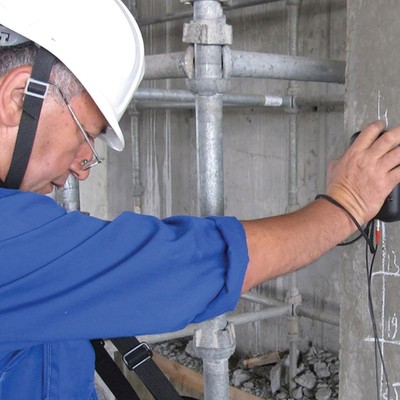
5b. Ultrasonic Pulse-Echo Flaw Detectors (single-channel)
Pulse-echo flaw detection sits between UPVT and tomography in its performance. It's a single-sided ultrasonic method that pre-dates tomography and is still the right tool for many targeted thickness and flaw checks where a full volumetric image isn't needed.
The physics is the same family as tomography but with a smaller aperture. A short ultrasonic pulse is transmitted into the concrete from a single transducer or compact array. The signal travels through the material, reflects off any acoustic-impedance change it encounters, and returns to the receiver. The instrument records the time of flight and the amplitude of each echo, and the operator reads element thickness, backwall depth, or the position of an internal reflector directly off the A-scan.

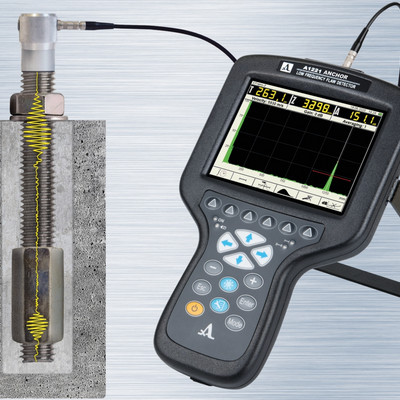
Flaw Detectors usage on concrete.
Compared to UPVT, pulse-echo is single-sided and locates discrete reflectors rather than measuring bulk velocity. Compared to ultrasonic tomography, it's a single-channel one-beam-path method, but it's faster to deploy, lower cost, and well suited to thickness gauging on slabs and walls, anchor and bolt inspection, and confirming the presence or absence of a single defect at a known location. When combined with external data processing software, a synthetic aperture reconstruction and 3D imaging can be provided, which is however a rather time-consuming proceeding.
5c. Ultrasonic Pulse-Echo Tomography and MIRA (multi-channel)
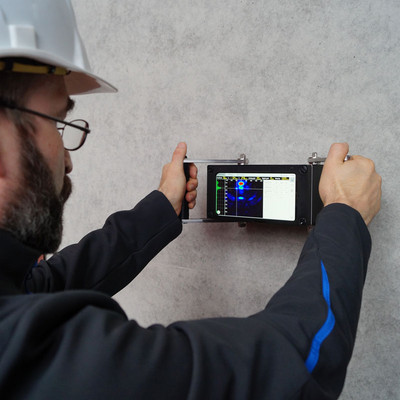
Ultrasonic tomography is the more advanced branch. It’s a multi-channel, imaging-based method requiring only single-sided access. MIRA is the instrument that implements this technology.
Three things separate tomography from UPVT at the physics level. First, it uses shear (transverse) waves instead of longitudinal ones. Shear waves at the relevant low frequencies allow the aperture to be reconstructed into a 3D image with the wavelength matched to the coarse-aggregate scale of the cement matrix [4][5]. Second, the operating frequency sits between roughly 20 and 100 kHz: the wavelength has to be larger than the coarse aggregate to avoid destructive scattering, and below 20 kHz resolution drops while above 100 kHz aggregate scattering destroys the signal [4]. Third, the sensors are Dry-Point-Contact (DPC) transducers, spring-loaded ceramic tips with integrated transmitter and receiver electronics that couple directly to rough, as-found concrete without gel, water, or any couplant preparation [6]. You place the sensor, press, and measure.
The data processing is what makes the imaging possible. The MIRA aperture is a 4 × 8 matrix of 32 DPC elements, and data follows the Full Matrix Capture (FMC) principle: each element fires individually while all 32 elements receive, producing 32 × 32 = 1,024 transmitter-receiver combinations at every measurement position. Those raw A-scans are then reconstructed using the Total Focusing Method (TFM), a variant of SAFT (Synthetic Aperture Focusing Technique), into a true 3D volume of the concrete beneath the sensor [1][2]. A single position gives you a 3D-dimensional voxel data set; scan along a line and you get panoramic B-scans and D-scans; scan in a grid and you get area C-scans and full volumetric datasets that can be sliced, zoomed, and scrolled in any plane, with ISO surface rendering, Maximum Intensity Projection, texture mapping, and gated volume MIP all available [2].
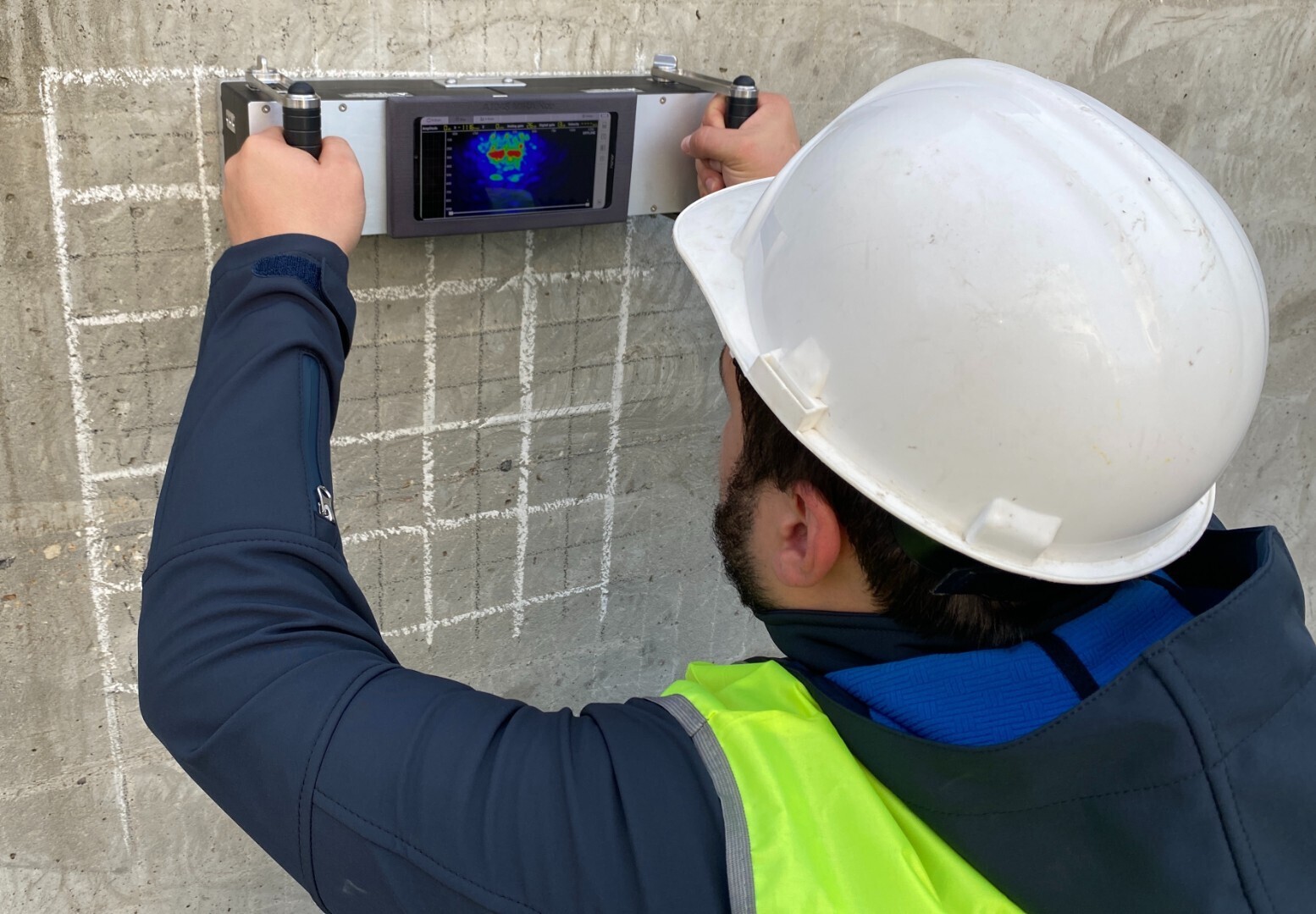
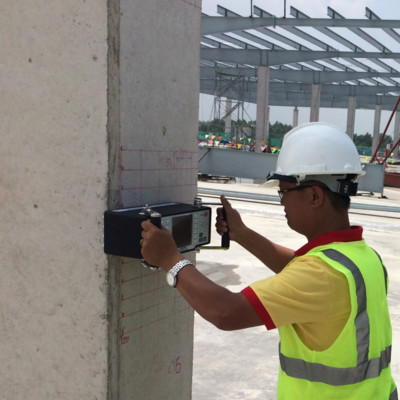
Depth reach scales in two ways. Couple multiple MIRA units into one synchronized matrix and the aperture extends from 32 to 64 to 96 to 128 DPC elements, which enlarges the near-field and pushes the depth of focus deeper, about 2 m with a single head, about 4 m with an extended aperture [2]. Beyond 4 m, into dam walls and massive foundations, a modulated excitation sequence replaces the standard short pulse, suppressing quantization and thermal noise over long sound paths. The technique was validated on a 5 m reference block at the BAM test facility in Horstwalde, Germany, where standard excitation could not resolve the backwall but pulse compression produced a clear result [1][2].
One useful side effect of the small DPC elements: their broad beam directivity captures diffraction signals from the tip of surface-opening cracks, which lets the system measure crack depth directly without insonifying the crack face. The measurement needs equal numbers of sensors on either side of the crack, and crack depth can't exceed the overall aperture size [1][2]. Hilbert envelope processing is applied throughout MIRA's pipeline to lift signal-to-noise in the reconstructed tomograms.
Put together, this is what tomography localizes inside concrete: multiple rebar layers, post-tensioning tendon ducts and grouting defects inside them, embedded pipes and conduits, honeycombs, internal air voids, delaminations, surface-opening cracks with their depth, and backwall depth and condition. MIRA can also measure pulse velocity from the same time-of-flight data, but using it for that is like using a CT scanner to take a temperature. The instrument does far more.
- It has limits worth being honest about. Dense dual-mat rebar casts acoustic shadows that degrade imaging behind the multiple mat. There's a near-field dead zone in the first 25 to 50 mm from the surface. Static contact is required, which makes scanning slower than rolling a GPR antenna. Warm asphalt overlays dissipate shear-wave energy. And scan planning and result interpretation still depend on operator skill.
The video below walks through how ultrasonic tomography works in the field:
5d. Impact-Echo
Impact-Echo is a single-sided acoustic method that shows up frequently in bridge and slab inspections. It fills a different niche than ultrasonic tomography, and understanding both helps you pick the right tool.
The physics is simple. A mechanical impactor strikes the surface and generates stress waves. A sensor next to the impact point records the response, FFT converts the time-domain signal into resonant frequencies, and the dominant frequency maps to element thickness or delamination depth.
Impact-Echo earns its place on mass concrete elements, slab thickness verification, and deep horizontal delaminations. The trade-off is that it's a single-point measurement, one spot at a time with no imaging, so manual workflow limits throughput. The impactor diameter controls frequency content and depth range, which means operator choices directly affect results. And Impact-Echo doesn't image defect shape, it gives a pass/fail indication per point. For volumetric defect mapping, ultrasonic tomography is the more complete tool.

Impact-Echo method schematic.
6. Electromagnetic and Radar Methods
GPR is a well-established technology and a frequent companion to ultrasonic methods. It deserves fair treatment, including an honest look at where it falls short.
GPR fundamentals. GPR works on dielectric contrast. An antenna transmits an electromagnetic pulse into the concrete. Reflections occur at interfaces where the dielectric properties change, most notably at rebar, conduits, and other metallic embedments. Rebar and conduits produce characteristic hyperbolic signatures. The depth-versus-resolution trade-off depends on antenna frequency: lower frequencies (around 400 MHz) reach deeper but resolve less detail, while higher frequencies (around 2,500 MHz) give fine resolution at shallow depth.
Stepped-Frequency Continuous-Wave (SFCW) radar. Instead of a single pulse, SFCW systems sweep through a frequency range, typically 400 to 4,000 MHz. This improves the depth-versus-resolution compromise.
GPR data supports 3D reconstruction and augmented-reality-style surface projection of subsurface features. One example: an Alabama hydroelectric spillway inspection used GPR GPR screening followed by ultrasonic tomography to distinguish trapped water from honeycombing inside the structure [8].
Electromagnetic cover meters. These operate on the eddy-current principle. Good for cover-depth QC on individual bars within approximately 150 mm of the surface.

Electromagnetic and radar method schematic.
Image source: SME Inc.
GPR's limits are worth being explicit about, especially compared to ultrasonic tomography. Signal attenuation increases rapidly beyond approximately 500 mm in typical reinforced concrete. In high-humidity or saturated concrete, water absorbs the electromagnetic signal, and chloride contamination makes it worse. GPR is strong for finding metal but poor at detecting concrete defects – it sees dielectric contrast, not acoustic impedance changes. Dry air voids, honeycombing, and delaminations are often invisible or ambiguous on GPR scans. Steel-fiber reinforced concrete blocks GPR almost completely.
Which is why GPR and ultrasonic tomography work better together than either does alone. In practice, GPR screens large areas fast and maps rebar layout, then ultrasonic tomography provides definitive defect sizing and characterization on the zones GPR flags. A segmental concrete highway bridge inspection in Florida used exactly this combination to detect grouting defects inside post-tensioning ducts, and most serious inspection programs use both methods [9].
7. Electrochemical Diagnostics for Rebar Corrosion
Corrosion is the number-one degradation mechanism in reinforced concrete worldwide. Carbonation lowers pH. Chlorides destroy the passive film on the steel surface. Rust expands two to six times the original steel volume depending on the corrosion product, generating internal pressure that eventually cracks and spalls the cover.
Half-cell potential mapping
Measures the thermodynamic probability that rebar corrosion is active at each test point. Well-known and widely used. Traditional setups require drilling through the cover and wiring directly to the rebar.
Surface resistivity (Wenner array)
Measures the corrosion kinetics, not just probability. Low resistivity means the concrete provides an easy path for ionic current, which accelerates corrosion rate.
Connectionless pulse-response devices
Measure corrosion rate, potential, and resistivity simultaneously without drilling. This matters on nuclear structures, post-tensioned bridges, and any asset where penetrating the cover is prohibited.

Electrochemical diagnostics method schematic
Source: Appl. Sci. (MDPI), 2017, 7(11), 1157
Probability plus kinetics tells the full story. Half-cell potential alone tells you corrosion might be happening. Resistivity alone tells you the conditions favor it. You need both to make a sound maintenance decision.
8. Radiographic, Thermal, and Acoustic Emission
Several other NDT families address specific diagnostic questions that ultrasonics and radar don’t cover well. None of these replaces the methods above, but each fills a gap worth knowing about.
Radiographic testing Isotopic sources (cobalt-60 or iridium-192) or linear accelerators transmit radiation through concrete, producing shadow images of internal features. The images are unambiguous and provide excellent defect visualization. The trade-off is operational: radiation permits, licensed operators, and exclusion zones make radiography impractical for routine field work.
Infrared thermography Thermal cameras scan large areas quickly, detecting shallow delaminations and moisture intrusion through surface temperature differences. Depth is limited to approximately 100 to 125 mm. Sun, wind, and surface condition variation generate false positives, so anomalies typically need confirmation by tomography or Impact-Echo.
Acoustic emission A passive technique that listens for the stress waves generated by active cracking. Sensors triangulate the source location in real time. Valuable for long-term structural health monitoring of bridges and containment structures, but not practical for one-off inspections since it requires sustained loading or environmental cycling to produce signals
9. Choosing the Right Method
Picking the right NDT approach comes down to a few practical questions about the job in front of you.
How many faces can you access?
If you only have one side, through-transmission UPVT is off the table. That leaves Impact-Echo, ultrasonic tomography, or GPR. Most field situations today are single-sided.
What are you looking for?
Rebar layout and conduit locations point to GPR as a starting point. Voids, delaminations, thickness, PT duct grouting defects point to ultrasonic tomography. Targeted thickness gauging, anchor and bolt inspection, or confirming a single reflector at a known location is pulse-echo territory. Concrete quality and uniformity screening is UPVT territory. Corrosion state calls for half-cell potential plus resistivity.
What’s the material condition?
Saturated or chloride-loaded concrete kills GPR performance. Dense dual-mat rebar creates acoustic shadow zones for ultrasonic tomography. Carbonated surfaces skew rebound hammer readings. Every method has a material condition that degrades it.
How deep do you need to go?
Shallow targets under 150 mm: cover meters and IR thermography. Medium range, 150 to 500 mm: GPR, Impact-Echo, and ultrasonic tomography all work. Deep targets from 500 mm to 4+ m: ultrasonic tomography is the only volumetric option.
What’s your area and time budget?
Large bridge decks and parking structures call for GPR and robotic scanning platforms for rapid screening [10]. Forensic hotspots and deep structures call for ultrasonic tomography to get definitive answers.
The most reliable inspection programs combine methods: GPR for spatial orientation, ultrasonic tomography for definitive defect sizing, and electrochemical techniques for corrosion rate assessment. No single instrument closes every question.

Technology Effectiveness Index
10. Equipment Categories and What Differentiates a Serious Ultrasonic Tomography System
Category 1 Surface-hardness instruments. Rebound hammers with digital logging and velocity-based readings. Simple, fast, limited to the surface layer.
Category 2 Single-channel ultrasonic (UPVT and pulse-echo). One-channel ultrasonic tools, UPVT for transit-time velocity measurement and pulse-echo for time-of-flight reflector location. Wireless data capture and grid-scan modes are standard on current instruments. Products in this category include A1220 MONOLITH UPVT, A1410 Pulsar and UK1401 Surfer.
Category 3 Multi-channel ultrasonic tomography arrays The state of the art for volumetric concrete imaging. What separates a professional system from a basic one: acoustic frequency range (20 to 100 kHz), number of DPC elements in the base aperture, whether the architecture supports aperture extension (coupling multiple array heads into one synchronized matrix), penetration depth (professional systems reach 2 m, deep configurations reach 4+ m), and the reconstruction pipeline (FMC/TFM for true 3D imaging). MIRA is the instrument in this category.
Category 4 Electromagnetic instruments. Cover meters, pulsed GPR, and stepped-frequency GPR. Good for finding metal and mapping rebar layout. Limited at depth, poor in wet conditions, and poor for detecting concrete defects. Key differentiators: antenna bandwidth, 3D reconstruction capability, and data export flexibility.
Category 5 Electrochemical instruments. Drill-to-rebar half-cell systems versus connectionless pulse-response devices. Key differentiators: whether they require a direct rebar connection, whether they measure corrosion rate simultaneously, and whether they support grid-mapping for spatial coverage.
The buying logic is straightforward. Match the physics envelope to the structures you inspect. Depth, defect type, and access conditions drive the choice.

Global NDT Technology Adoption Share
11. Key Takeaways
Multi-modal inspection is the default. No single method covers the full defect spectrum, and the strongest programs combine several approaches – GPR for layout, ultrasonic tomography for volumetric imaging, electrochemical for corrosion.
Single-sided access is the new normal. Most field conditions limit you to one face. That constraint should drive your method selection from the start.
Ultrasonic tomography has moved from specialist tool to mainstream. FMC/TFM architecture, DPC transducers, and aperture-scaling designs like MIRA have made single-sided, 3D concrete imaging practical and repeatable across a wide range of structures and depths.
UPVT and ultrasonic tomography complement each other. Velocity tells you something is wrong in a zone. Tomography shows you what it is and exactly where it sits. The diagnostic trade-offs across the full method landscape, depth reach against accuracy and defect resolution, are summarized in the chart below.

Diagnostic Trade-Offs
Corrosion assessment needs both halves. Thermodynamics (half-cell potential) tells you whether corrosion is active. Kinetics (resistivity) tells you how fast it's progressing. One without the other gives you an incomplete picture.
Closing
A closing note on where we fit. At ACS Group we manufacture instruments across all three ultrasonic families covered in this article. Our Pulsar and UK Surfer products are single-channel UPVT tools for fast quality screening, our A1220 MONOLITH 3D and A1221 Anchor handle pulse-echo flaw detection for single-sided thickness and reflector measurement, and our Mira 3D and Mira 3D Pro implement the multi-channel FMC/TFM tomography described in Section 5c for volumetric imaging from a single surface. The reason we build all three is the same reason this article keeps drawing the distinctions: velocity screening and volumetric imaging answer different questions, and a serious inspection program needs access to all of them.
Ultrasonic NDT of concrete is not a side line for ACS Group, it is the core of what we do. Our team has spent decades developing the DPC transducer architecture, the FMC/TFM reconstruction pipeline, and the validation procedures (including the BAM 5 m reference block in Horstwalde) referenced throughout this guide. The recommendations and method descriptions you read here are the same ones our specialists give to bridge owners, dam operators, and inspection contractors in the field.
References
[1] Bulavinov, A., Pinchuk, R., Samokrutov, A., Shevaldykin, V. “Advanced tomographic imaging techniques for quality assessment of concrete structures by means of ultrasound.” NDE NucCon 2023, International Conference on Non-destructive Evaluation of Concrete in Nuclear Applications, Espoo, Finland, January 2023.
[2] Bulavinov, A., Pinchuk, R., Samokrutov, A., Shevaldykin, V. “New trends in the ultrasonic imaging of concrete structures by means of 3D-FMC technology.” ACS-Solutions GmbH, Saarbrucken, Germany.
[3] Kozlov, V.N., Samokrutov, A.A., Shevaldykin, V.G. “Thickness measurements and flaw detection in concrete using ultrasonic echo method.” Nondestructive Testing and Evaluation, 13(2): 73–84, 1997.
[4] Bishko, A.V., Samokrutov, A.A., Shevaldykin, V.G. “Ultrasonic echo-pulse tomography of concrete using shear waves low-frequency phased antenna arrays.” Proceedings of the 17th World Conference on Non-destructive Testing, Shanghai, China, 2008.
[5] Haza, A.O., Petersen, C.G., Samokrutov, A. “Three-Dimensional Imaging of Concrete Structures Using Ultrasonic Shear Waves.” German Instruments SA, Denmark, 2011.
[6] Shevaldykin, V.G., Samokrutov, A.A., Kozlov, V.N. “Ultrasonic low-frequency short-pulse transducers with dry point contact. Development and application.” International Symposium on Non-Destructive Testing in Civil Engineering (NDT-CE), Berlin, 2003.
[7] Bungey, J.H., Millard, S.G., Grantham, M.G. Testing of Concrete in Structures, 4th ed. Taylor & Francis, 2006.
[8] Bigman, D.P. “Ground penetrating radar inspection of a large concrete spillway: A case study using SFCW GPR at a hydroelectric dam.” Case Studies in Construction Materials, Vol. 16, 2022.
[9] Federal Highway Administration (FHWA). “Identifying Potential Damage to PT Ducts.” Long-Term Bridge Performance Program, U.S. Department of Transportation.
[10] Gucunski, N. et al. “Robotic Platform RABIT for Condition Assessment of Concrete Bridge Decks Using Multiple NDE Technologies.” FHWA-HRT-13-035, January 2013.
Need Help Choosing the Right Technology?
If you're evaluating which technology fits your inspection program, our engineering team is happy to talk it through.